How Does a Circular Saw Work
Mar 26, 2022
In this guide, we will be looking at how the circular saw works. However, it is important that you first know some of the important features of the circular saw and the types of blades available.
How Does a Circular Saw Work
As you already know, circular saws are of different types in the market. There are some features that will be available in some circular saws and not available in other saws. In this section, we will be looking at some of the basic features circular saws have.
It is of great importance that any circular saw is aware of these features so that they ensure the saw they are about to purchase has them before they purchase them. Although it will be quite difficult to understand the features at first, when you get used to the circular saws, you will know their importance.
Base Plate
Base plate refers to the squared shape and weighted base of the circular saw. The base plate is normally printed with the metric ruler which enables anyone to determine the cut’s precise measurements. There is a protracted angle that comes from the base which makes it a rounded half-circle for every measurement. Measurements will always be made in a circular motion since it is a circular saw.
It is possible to always adjust the base plate to fit at any angle. You can always tilt to make cuts that are angled especially when working with woods. It is also possible for you to make adjustments anywhere from 45 to 90 degrees making the circular saw among the most movable saw types in the market. Ensure that you always stick to the scale which has been built into the base plate to ensure accurate cuts are made.
Blade
Circular saws do come in a variety of blade sizes. As a safety precaution, you will always have to keep your hands away from the blade whenever you are using the circular saw.
The circular saw blades’ unique feature is their ability to set their depth for cuts which will give one the power of doing different types of dynamic tasks.
It is possible to set the blade at 0.3 inches when making delicate cuts. There is an adjustment lever at the motor’s rear part that will enable you to make adjustments to the blade.
Ripping Fence
Not all the circular saws have a ripping fence although most do have it. The ripping fence is used in guiding the blade whenever you are cutting along the board making a ripping cut instead of an angled cut. It is a faster method that will enable one to achieve smooth and straight cuts across the board.
Dust Ejector
Dust ejector helps in getting sawdust away from the user’s face when they are making cuts using the circular saw. The majority of the new circular saw models have dust ejectors which help in blowing sawdust away from the area whenever you are making the cuts.
Blade Guard
The blade guards will always be available in every type of saw you purchase and are a very important feature when it comes to safety. In fact, it is never recommended to use a circular saw without the blade guard. Blade guards comprise two different parts. There is a fixed guard that is located over the blade top and can never be removed. There is also the floating guard that can easily be pushed out of the way whenever you are ready to move the blade into position. The majority of the blade guard does have a handle that enables it to be lifted or rearranged.
Blade Types
Depending on the circular saw the size and type you settle for, there are chances you might be faced with different choices for your circular saw blade. The blades are available in different sharpness and are made of different materials so it is important that you always know what you will be cutting before you make any purchase.
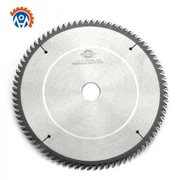
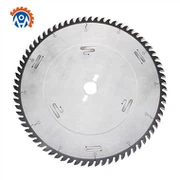
HSS (High-Speed Steel) and TCT (Tungsten Carbide Tipped) are the two most popular types of circular saw blades. The HSS (High-Speed Steel) has grown to become the industry standard in the amateur and professional worlds. The TCT (Tungsten Carbide Tipped) is well known for its extreme durability and tough blade that is capable of cutting through hardwoods with ease.
Other circular saw blade types include:
1,Blades having more than 40 teeth: Making crosscuts
2,Blades with less than 28 teeth: Ripping timber along the grain
3,Abrasive blades: Cutting metal and concrete. However, they wear out easily and will always have to be replaced.
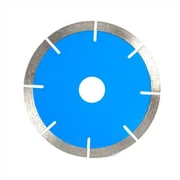
4,Diamond rim Blades: Very specialized and are made from industrial diamonds which makes them durable and extra tough hence suitable for cutting brick and cement products.
5,Tempered Alloy Blades: Used for metal tubes, aluminum, or galvanized metal cutting.
Setting Up the Circular Saw
There are several preparations you will have to do before you turn on your circular saw. In this section, we will be highlighting how the circular saw works.
Support Materials
In case you will be cutting a plank of work, you are not expected to be holding it in your hands as you cut. Ensure the material is placed on a steady and solid surface. A concrete slab or board will never work since it will not be able to react to the circular saw’s blade movement and power.
Mark the materials
Using a pencil or a pen together with a measuring tape, have all the areas on the wood plank marked to ensure you accurately align the blade before you start cutting.
Although an angle square is not that important, it will be of great importance during this whole process. Most people enjoy using angle or steel squares to help in marking the path where the blade will be traveling alone for the cut.
Set Depth
Keep in mind that the circular saw blade comes with a wide range for the depth setting. Never stretch it that far although it is highly recommended not to show any more of the circular saw blade that you have already done for accuracy and safety reasons.
When cutting a 50mm thick wood plank, ensure that you set your blade to 40mm or 45 mm. When you do this, it will help in reducing the kickback amount you can receive whenever the blade is in full use.
Inspect the Saw Guard
When lowering the blade to cut the wood planks, ensure the saw guard is running as it should be. It needs to push up when the saw starts cutting. When it is working as it should ensure you always keep it up. Just do not forget to return it down when returning the saw to the workbench. The guard will always be there for a reason. All you have to do is ensure you are protected all the time.
Start the Cutting Process
You will always have to look down at the blade’s right-hand side on the wood you are set to cut.
1,Ensure that you line up the scaled baseplate using your pencil mark to ensure accuracy.
2,also have to ensure that you keep your eyes on the guide every time.
3,Your body has to be in a natural position when watching the saw cut down the line.
4,Repeat the process for the entire cutting procedure.
5,Ensure that you go one mark at a time and always take your time.6,Never rush whenever you are using the power tools.
Finally:
Circular saws are a powerful tool that most carpenters can never afford to miss in their collection. Investing in a circular saw will help make your work easier and fast. The circular saw will last for a long time provided you understand how it works and ensures that you always take necessary precautions to help in protecting yourself.
If you have any questions or are interested in any TCT saw blade, do not hesitate to get in touch with us.