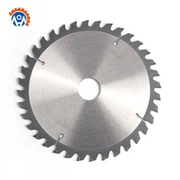
you should know the 6 things about Cold Saw Blade Sharpening
Aug 01, 2022
Set of a circular cold saw blade used for metal cutting.
1. What Factors Affect Sharpening?
The act of sharpening your cold saw blade revolves around some factors. These factors help you to determine how to go about sharpening your cold saw blade. Failure to consider these various factors can cause improper sharpening and job delay. It would translate to the poor performance of your cold cut saw blade and loss of money and sometimes valuable customers. Below are the factors:
I. Cold saw blade tip:
For an excellent performance of cold saw blade when cutting different metals, they are typically manufactured and finished at the tip/teeth with either HSS (high-speed steel) or Carbide. Although Carbide tipped cold saw blades are powerful and tend to last long due to the hard nature of Carbide, this makes the sharpening somewhat tricky as well. Unlike the HSS-tipped cold saw blade, which is relatively easier to sharpen but with lesser cutting ability compared to carbide-tipped.
ii.Nature of metal:
Mild steel, Stainless steel, Aluminium, etc. are among the numerous metals a cold saw blade is capable of cutting with ease. Cold saw blades would have varying performance due to the type of metal it cuts- This implies that the cold saw blades teeth would get blunt quickly depending on how strong the metal it cuts is. Hollow or solid metal rods or bars also contribute to the wear of a blade, so does it contribute to the sharpening.

2. When Do I Need To Sharpen?
Usually, it is left to you to determine when to sharpen your blade(s) based on its performance. Remember that for every sharpening of the blade’s tooth, some portion of the blade gets ground off- This further affects all the critical angles of a typical blade, which in turn alters the original dimensions of your blades. The implication of this is that you should only sharpen your blade when the teeth become blunt and cannot cut anymore or takes longer than usual to cut. Hence, there is no rigid or specific date attached to sharpening your cold saw blades. In essence, plan to sharpen your blade only when it can no longer cut your desired metals. The best you can do is to estimate an average period your blade last before getting blunt based on your usage. Finally, kindly note that whatever works for you might not work for others, so stick to your unique sharpening plan and schedule.
Performance of your cold saw blades can be measured using the following yardsticks:
Increment in tear-out and chipping during cutting
Higher resistance to cutting
Difficulty in following cut lines
Increase in the noise of electric/saw motor
Signs of wear and damage.
Inspection all teeth

3. How Often Do I Sharpen?
Larger diameter cold saw blades can be re-sharpened and re-used up to at about 15 to 20 times before discarding and replacing with a new one. Discard the small diameter blade.
The carbide-tipped cold saw can be re-sharpened up to 4 or 5 times. Again, a rough estimation shows that freshly sharpened blades last between 15 to 20 cuts before it gets blunt still.
The type of metal to cut also contributes to how frequent you sharpen your blades. If you cut Aluminium more than steel, then your cold saw blade is likely to get blunt earlier than that.

4. What Should I Pay Attention To When Sharpening?
When sharpening your blade, key factors to pay careful attention to are as follows:
i. Hook angle:
it is important not to tamper with the hook angle of the cold saw blades as this can that can negatively affect the balance of the blade when mounted for use and can even give an inferior cutting surface finish to the workpiece.
ii.Tooth thickness:
A common rule of thumb is that you never let your cold saw blades get blunter than 0.008′ (8/1,000 inches) edge radius. The maximum allowable bluntness is 0.004′, which is the same as the thickness of a piece of paper.
Showing tooth thickness and hook angle of a cold cut saw blade

6. What To Avoid When Sharpening?
If you have decided to carry out sharpening yourself then you might need to take note of the following precautionary measures to avoid injuries or accidents of any form:
1. Putting off electrical switch and socket when switching the cold saw blades for the diamond saw blade.
2. Use safety goggles to avoid fine chips from entering your eye.
3. Safety gloves and ear-muffs are also essential to prevent cut to the hands and unbearable noise.
Operator wearing a glove and other protective wears as he cuts metal

In summary, through this article, you should be able to determine if you need to sharpen your cold saw blades and other related matters arising from sharpening. HANMAtools is known to be the number-one solution provider on saw blades and similar related services at the most competitive price you can find in the market. Do well to contact and partner with us on your next cutting tool project, and we are sure you would not be disappointed.